
 Türkçe
  English
  فارسی
فارسی  Russian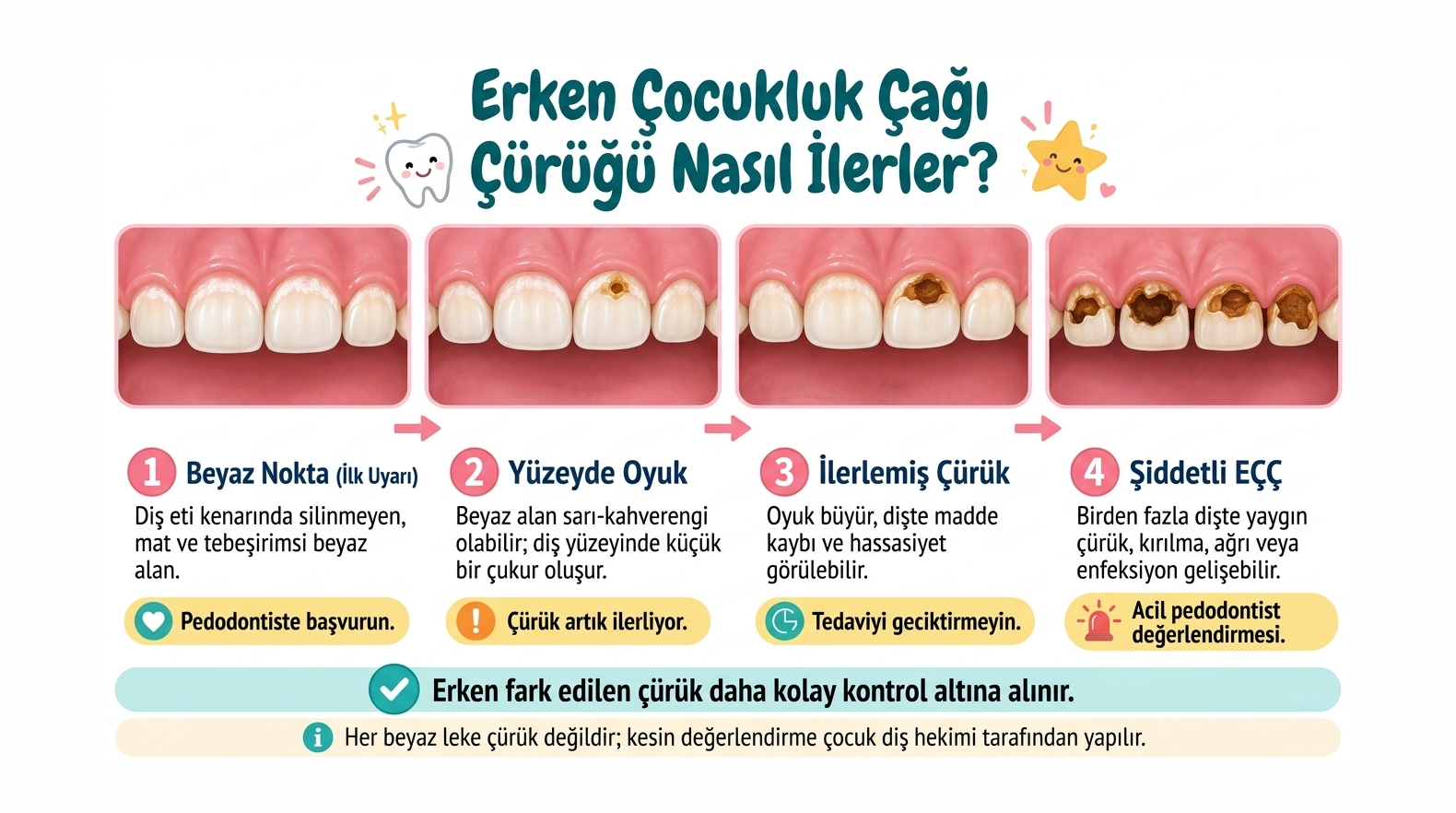
What Is Baby Bottle Tooth Decay? Preventing Early Childhood Caries
Tooth decay in babies and young children is commonly referred to as “baby bottle tooth decay.” However, this condition is not caused solely by bottle use. Frequent feeding throughout the night, frequent consumption of sugary foods and drinks during the day, and inadequate oral hygiene also play important roles in the development of tooth decay. Therefore, the term Early Childhood Caries (ECC) is more accurate and is more commonly used today.
In the development of tooth decay, not only the amount of sugar consumed but also how frequently the teeth are exposed to sugar is important. Falling asleep with a bottle, consuming milk or sugary drinks frequently throughout the night, and failing to clean the teeth after feeding can keep the oral environment favorable for the development of tooth decay for prolonged periods.
Saliva flow decreases during nighttime. As saliva’s cleansing and protective effects decrease, food residues remaining on the tooth surfaces can contribute to the development of tooth decay. In particular, putting a child to sleep with a bottle containing milk, fruit juice, sugary drinks, or sweetened liquids poses a significant risk.
ECC may initially appear as dull, chalky white spots along the gum line, particularly on the upper front teeth. These white spots may indicate mineral loss on the tooth surface and represent an early stage of tooth decay. If left untreated, the spots may gradually become yellow or brown, followed by loss of tooth structure, fractures, sensitivity, and pain.
As tooth decay progresses, children may experience difficulty eating, sleep disturbances, irritability, and infection. In advanced cases, a simple filling may no longer be sufficient, and more extensive treatments such as root canal treatment, crowns, or tooth extraction may be required. Therefore, waiting until pain develops is one of the biggest mistakes that can be made in managing early childhood caries. The best time for treatment is when the lesion is first detected. As lesions progress, treatment becomes more difficult and costly for the dentist, the family, and the child.
To prevent early childhood caries, teeth should be brushed twice a day with a soft-bristled, age-appropriate toothbrush starting as soon as the first tooth appears. Brushing should be performed by a parent or caregiver. If the child refuses to cooperate, brushing can be made easier through compromises such as, “You brush first, and then I’ll help you finish,” or by turning brushing into a game.
Children should not be allowed to consume sugary snacks or drinks frequently throughout the day. Pacifiers should never be dipped in honey, jam, molasses, sugar, or other sweet products. Cleaning a pacifier by putting it in an adult’s mouth or sharing the same spoon with a child is also not recommended, as this may contribute to the transmission of bacteria associated with dental caries.
The first dental visit should take place after the first tooth erupts and no later than the child’s first birthday. Regular dental check-ups allow early signs of tooth decay to be detected, the child’s caries risk to be assessed, and preventive recommendations tailored to the child’s individual needs to be provided to the family.
Early childhood caries is largely a preventable health condition. To prevent it, healthy feeding and oral hygiene habits should be established from the moment the first tooth appears, without waiting for the child to experience pain or for visible tooth decay to develop.
A NOTE FROM THE PEDIATRIC DENTIST
If you notice white, yellow, or brown discoloration on your child’s teeth—especially along the gum line—that does not disappear when wiped away, do not wait for it to resolve on its own. Although not every white spot necessarily indicates tooth decay, such changes should be evaluated by a pediatric dentist. The earlier tooth decay is detected, the easier it is to preserve the tooth.