
 Türkçe
  English
  فارسی
فارسی  Russian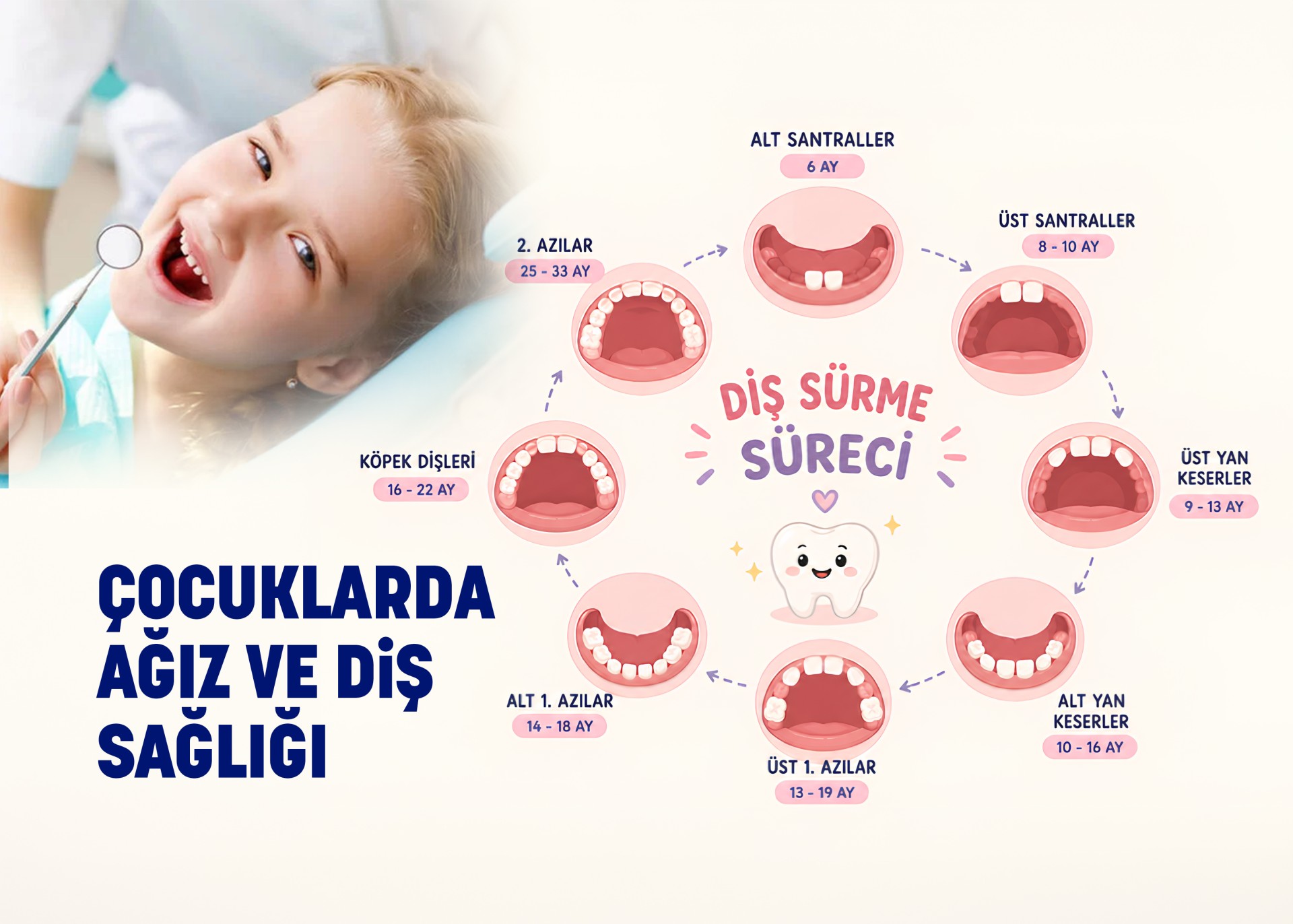
Oral and Dental Health in Children
A Parent's Guide: From the First Tooth Eruption to the First Dental Visit
The teething process in infants usually begins with the eruption of the lower central incisors, typically around the 6th month of life. This period can sometimes be challenging for both children and their families. During teething, babies may experience excessive drooling, itchy gums, irritability, redness on the cheeks, and a constant urge to bite or chew on objects.
Helping babies feel comfortable during this period is very important. The use of chilled teething rings, medications prescribed by pediatric dentists when deemed necessary, or gently massaging the gums with a clean finger may help relieve discomfort. The eruption of all primary (baby) teeth is generally completed between 2.5 and 3 years of age, and establishing proper oral care during this period is essential.
Dental check-ups should begin as soon as the first tooth appears in the mouth, as this is the first step toward maintaining good oral health. An individualized oral hygiene routine should be established for each child under the guidance of a dentist following the eruption of the first tooth.
It should always be remembered that health begins in the mouth. Therefore, regular follow-up by both a pediatrician and a pediatric dentist, working in collaboration, is one of the most important steps toward ensuring a healthy future for every child.
Finally, it is important to remember that every child develops at a different pace. Teeth may erupt earlier or later than expected without necessarily indicating a health problem. In some cases, babies may even be born with teeth or develop teeth within the first 30 days after birth. Teeth present at birth are called natal teeth, while those that erupt within the first 30 days after birth are known as neonatal teeth. The need for extraction of these teeth must always be evaluated by a pediatric dentist. Failure to have natal or neonatal teeth assessed by a qualified dental professional may pose a serious health risk to the infant. Therefore, careful evaluation is essential.
A Note from the Pediatric Dentist
A variation of several months in the timing of tooth eruption (whether earlier or later than expected) is not, by itself, an indication of disease. A deviation of up to approximately six months in the eruption of the first primary tooth is generally considered normal. However, if tooth eruption has not begun within the expected timeframe, an examination by a pediatric dentist should not be delayed.
Pediatric Dentist, Specialist Dentist ESB
Stay Healthy!